


I find this time paradoxical in some ways.
On one hand, I like the spirit and the fairy lights (these I adore!).
But on the other, I see through a veil of illusion rooted in tradition.
And I don’t do well with traditions, because they often mean nobody questions them. Or at least, not enough people do. That’s usually why they survive in the first place.
On the surface, everything accelerates.
Plans multiply.
Family, travel, money, decisions, recipes, presents, unfinished conversations - suddenly we feel pressured to tie everything into a neat little bow before the year dares to end.
And to show the best of our smiles to everyone because… hey! It’s Christmas, right?
And yet - energetically, symbolically, anciently - this is the moment when time pauses.
The Solstice.
When the Sun appears to stand still.
When civilizations far wiser than ours understood that this wasn’t a time for pushing forward, but for stopping long enough to feel where you are.
Ancient cultures didn’t mark this threshold with polite family dinners or excessive consumption… of wrapped things.
They marked it with excess food, wine, fun, joy… and sex.
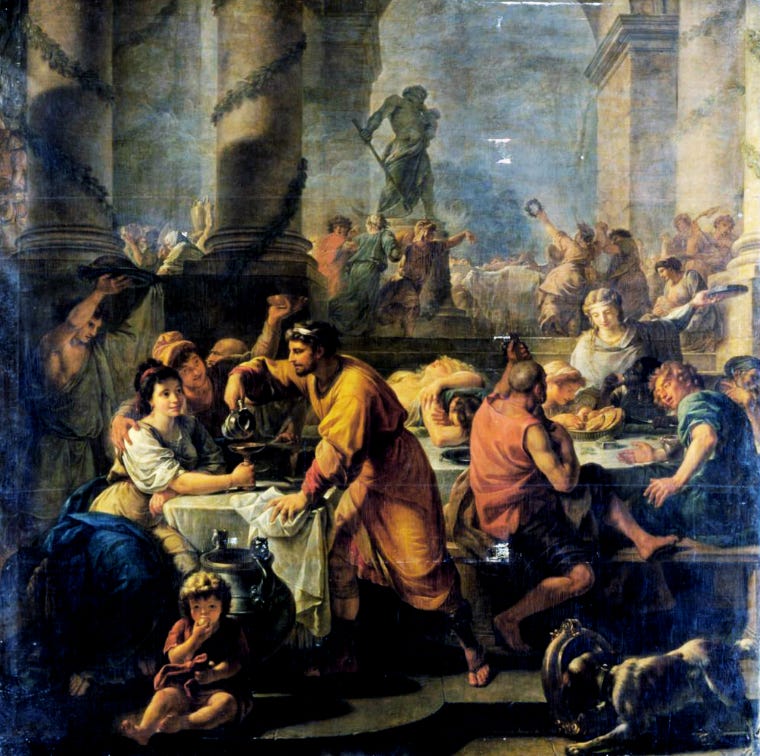
For the Romans, this season belonged to the Bacchanals, the Dionysian rites, the Saturnalia: celebrations where wine flowed freely, social rules dissolved, bodies loosened, laughter became prayer, and pleasure was not only allowed, but sacred.
They drank.
They danced.
They touched.
They surrendered control.
Not because they were reckless, but because they were deeply connected to Eros - and because they had come through a long, demanding harvest period. Now, it was time to rest.
And Eros, to them, was never just sex.
Eros was vitality.
Pulse.
Creative force.
The current that moves through the body when life is allowed to circulate instead of being contained.
They understood that when Eros stagnates, people stagnate.
When desire is suppressed, life turns rigid.
And when the body is denied expression for too long, it finds unhealthy outlets.
So they gave Eros a doorway.
They let it move through wine, music, rhythm, pleasure, chaos, communion.
They trusted that aliveness (when honored consciously) restores balance.
At the darkest point of the year, they didn’t ask humans to behave better.
They asked them to feel… and enjoy more.
Fast forward to now, and we’ve done almost the exact opposite.
Modern man lives profoundly disconnected from Eros.
Not just sexually, but existentially.
We put on our masks to get through the holy season because we “have to.”
How are you going to say no, right?
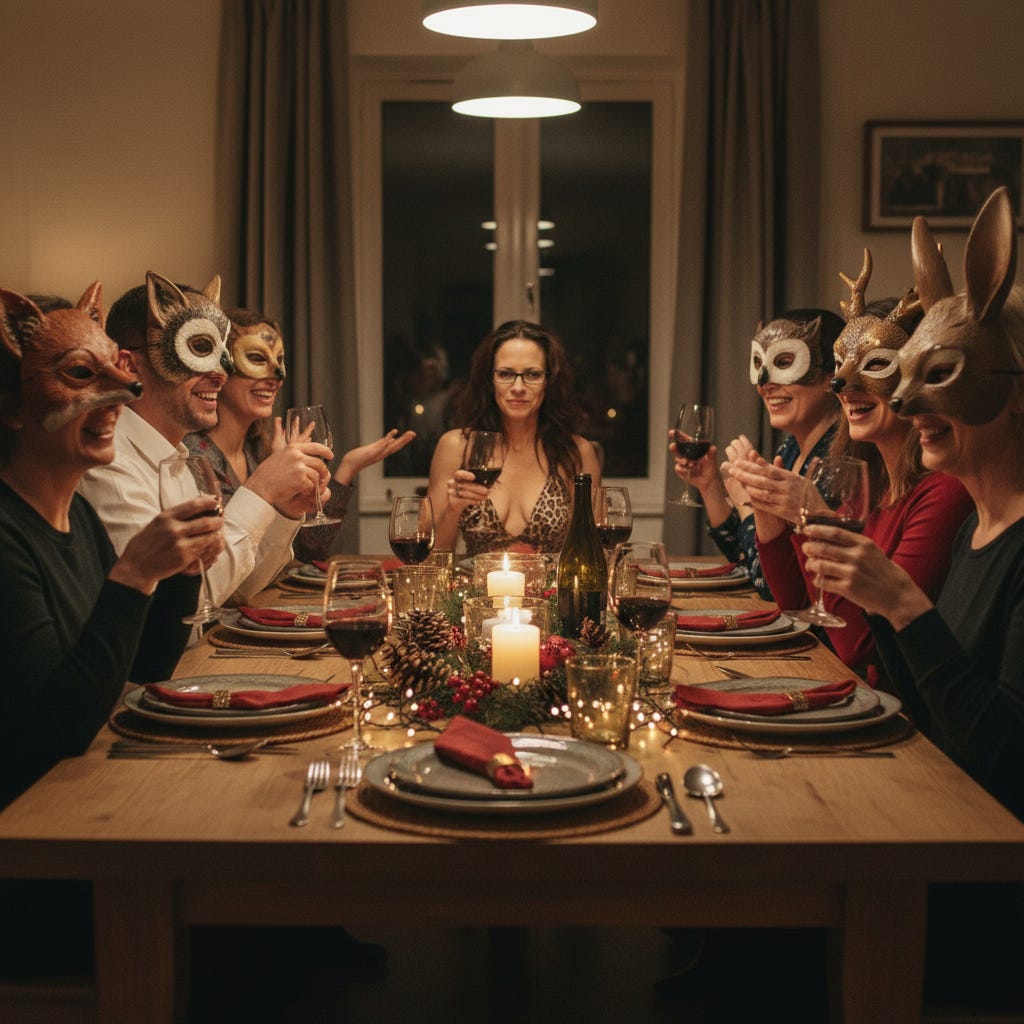
Desire and pleasure remain taboo (don’t you dare bring that topic up at a family dinner).
The body is tolerated rather than listened to.
Joy must be earned.
Rest must be justified.
We’ve replaced ritual with routine.
Release with distraction.
And Eros with dopamine.
And then we wonder why burnout, numbness, addiction, and quiet despair feel so common - especially in midlife.
The season itself is still whispering the same message it always has:
slow down,
turn inward,
feel what is alive… and what is not.
But modern life keeps shouting productivity, compliance, repression.
Don’t stand out.
Do as the others do.
And so we’re left holding both at once:
movement and stillness,
discipline and desire,
control and longing.
That tension creates imbalance. It shows up as unease - a subtle feeling of off-ness (yes, I probably made that word up).
If you happen to notice it (like I do) congratulations. You’re aware.
Because if there’s one thing worth doing before stepping into the next chapter - especially one as astrologically significant as 2026! - it’s this:
Arrive there alive.
Not just functional and responsible.
But connected - to your body, your desire, your inner force.
Not rushed across the threshold…
but consciously crossing it, having let life move through you again.
That, quietly, is what the ancients understood.
And that is what modern man is being asked to remember.
You might notice it in small moments.
When you don’t feel like going.
When your body tightens at the idea of another obligation.
When you fantasize (quietly, guiltily) about doing nothing, or doing something entirely different.
Staying home.
Leaving early.
Not explaining yourself.
That’s usually the moment we override ourselves.
We say yes when we mean no.
We smile when we want to roll our eyes.
We play along so we don’t disturb the ritual.
But here’s the quiet truth no one tells you:
Saying no doesn’t make you difficult.
Being different doesn’t make you wrong.
Listening to your body doesn’t make you selfish.
It makes you honest.
And honesty (especially at this time of year) is a radical act.
We don’t need to burn traditions down overnight.
We don’t need to justify ourselves.
And we certainly don’t need to perform joy for anyone.
Sometimes the most Bacchanalian, rebellious, life-affirming thing you can do…
…is to opt out.
And if you are celebrating the tradition - then do it fully.
Drink the wine. Laugh. Be present. Enjoy it.
Just remember:
in roughly 365 days, the lights will be back, the scripts will repeat, and the cycle will offer you the same choice all over again.
Welcome to Groundhog Day.
The difference is… this time, you might actually notice it.
Love (and red wine, please) 🌹
Feliz cumpleaños 🎂 Rosa 🌹! 💐
Ms Dawson you are beautiful eatible enjoyment in the ether. Keep on coming ,again and again. Will promise to do the same 143 <3